

Everything is a productWhether you sell a one‑time physical shipment, a recurring SaaS subscription, digital files, or usage‑based API access, everything in Solifyn is modeled as a unified Product. You configure the specific pricing architecture, multi-currency layers, and fulfillment logic up‑front, which can then be managed via dashboard UI or programmatically via API.
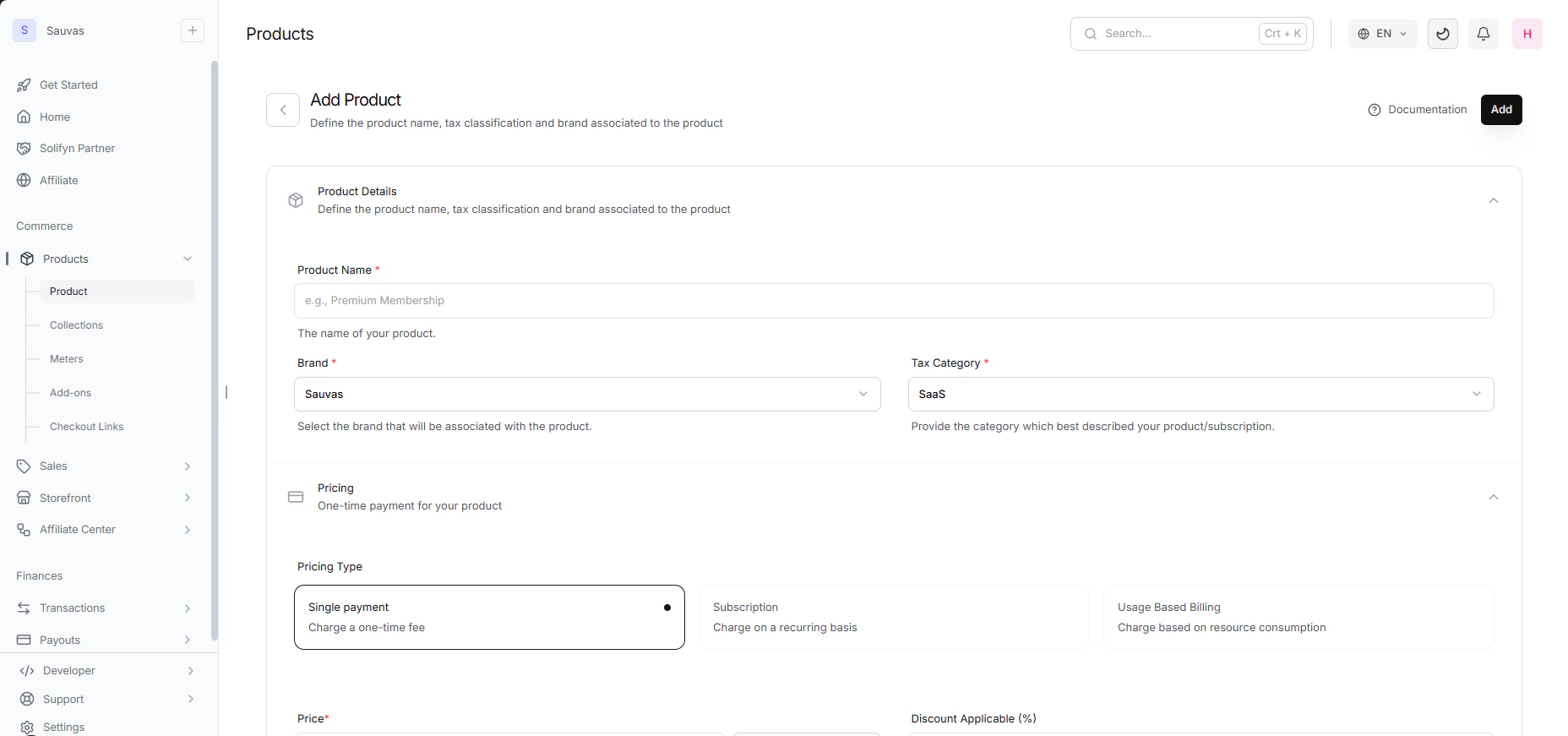
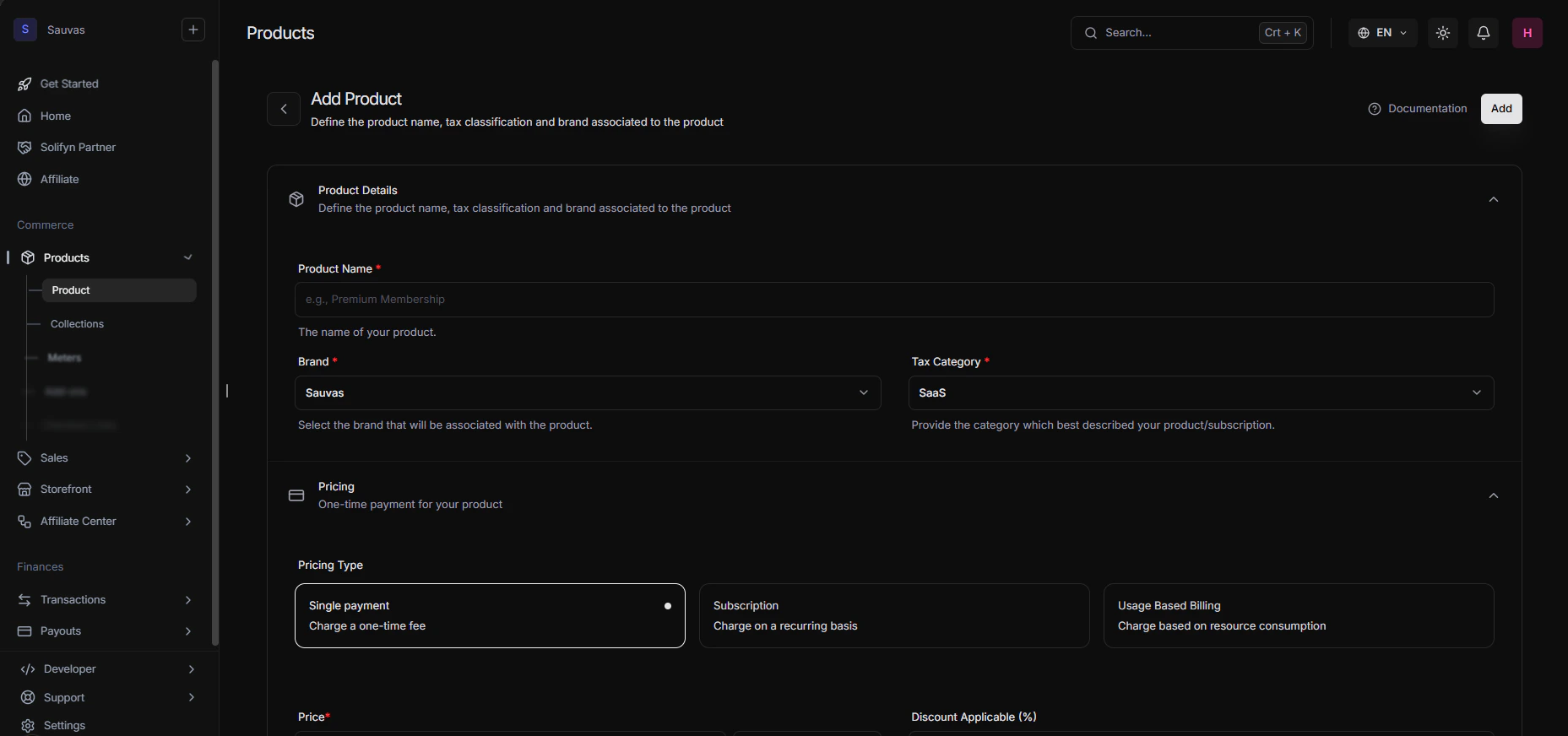
Create a product
You can instantiate new products directly within your Solifyn workspace dashboard or via our core REST API. Each configuration maps the tokenized identifiers required for downstream processing.Name & Description
Provide a clear, value‑oriented title and concise marketing copy for your inventory item.- Markdown Support: The description field fully renders Markdown layouts.
- Checkout Exposure: The first line of your description appears prominently on the customer‑facing checkout interface.
Product Classification & Pricing Model
Determine how you want to charge your customers. The pricing model, billing cycle, and base interval parameters are immutable once the product entity is committed to the ledger.Select Billing Model
- One-Time Purchase: Customer is charged once for permanent software access, digital deliverables, or a single physical shipment.
- Recurring Subscriptions: Bill on a strict schedule with support for trial phases, automatic renewals, and add‑on parameters.
- Usage-Based (Metered): Bill dynamically based on actual resource consumption, compute metrics, or API throughput.
Determine Pricing Type
- Fixed Price: Establish a static, base cryptographic currency amount.
- Pay What You Want: Empower users to set custom contributions with optional minimum thresholds and default anchors preset at checkout.
- Free: Zero‑cost tier, ideal for open‑source tracking or onboarding lead generation.
Map Inventory Parameters (Physical Commerce)
For physical commerce products, you can attach explicit logistical metadata to the product record:
- SKU Mapping: Assign unique corporate Stock Keeping Units for backend warehouse sync.
- Weight & Dimensions: Input mass and physical volume data used by external logistics networks to calculate spatial postage rates.
Configure Multi-Currency Routing
Solifyn automatically resolves localized financial presentations based on your customer’s geographic IP address.
- Fallback Base: Your organization sets a default fallback processing currency (e.g., USD).
- Additional Rails: Enable localized currency matrices. The underlying price layout (fixed or metered tiers) remains structured symmetrically across all active rails.
Supported Payment Currencies Matrix
Supported Payment Currencies Matrix
| Currency Code | Currency Name |
|---|---|
| USD | US Dollar |
| EUR | Euro |
| GBP | British Pound |
| CAD | Canadian Dollar |
| AUD | Australian Dollar |
| JPY | Japanese Yen |
| CHF | Swiss Franc |
| INR | Indian Rupee |
| BRL | Brazilian Real |
Trial Periods
For products bound to subscription workflows, you can instantiate an initial trial phase during which downstream processors bypass payment generation. Toggle Enable trial period and inputs specific integer counts alongside time unit dimensions (days, weeks, months, years).Product Media Management
- Upload public product assets, photography, or software banners up to 10MB per asset.
- Supported MIME types include high-density PNG, JPG, and optimized WebP.
- Re-order or hot-swap image positions within your layout array at any time.
Checkout Custom Fields
Collect specialized consumer metadata during checkout registration. This is highly efficient for populating internal shipping registries, capturing telephone vectors, or binding contractual agreements.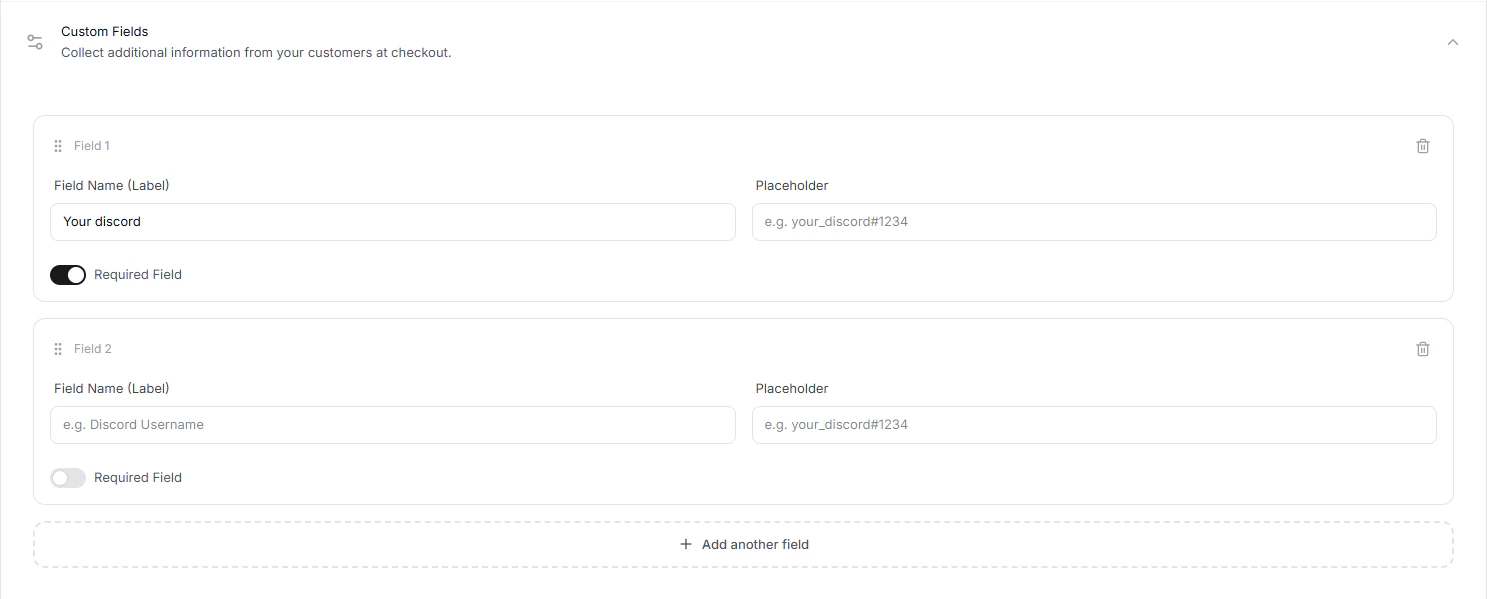
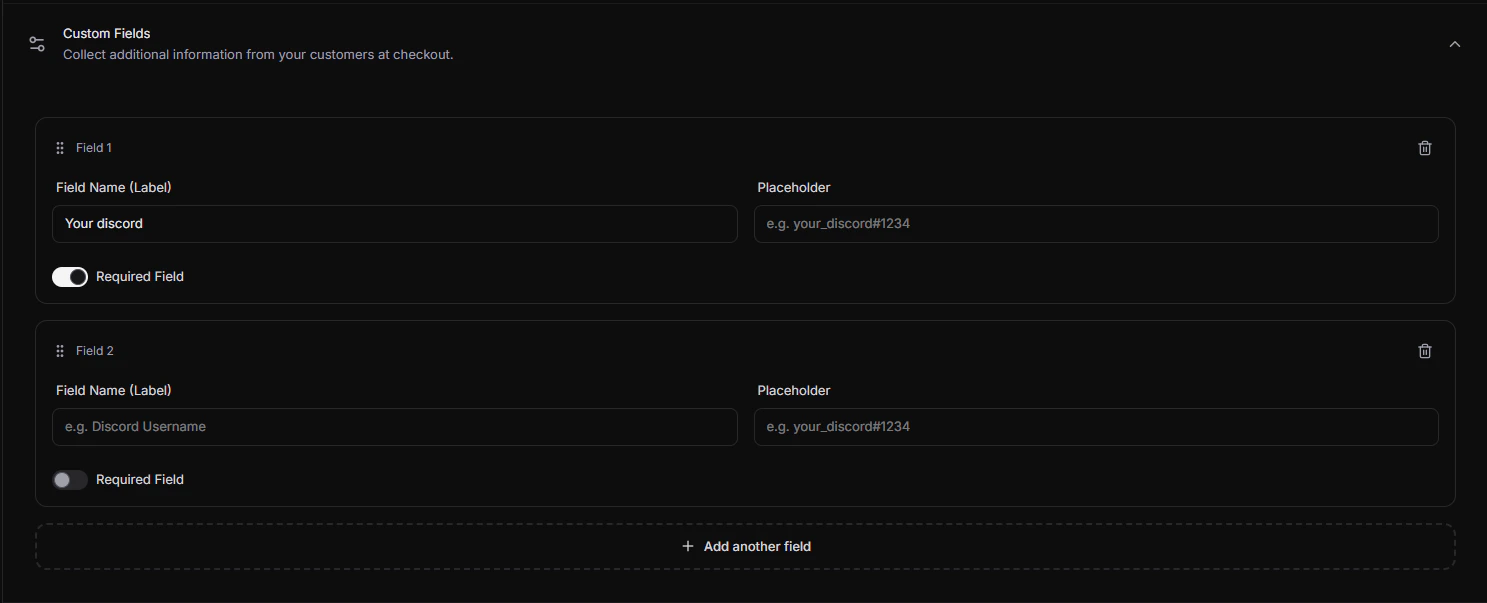
- Text Inputs & Numeric Values
- Calendar Dates
- Dropdown Select Menus
- Boolean Checkboxes (Marking a checkbox as Required acts as a strict legal gatekeeper before payment completion)
Best Practices
- Start with Clarity: Separate distinct products for each individual pricing option (e.g., Monthly vs Yearly).
- Use Trials Thoughtfully: Pair subscription trials with structured user onboarding pipelines to drive feature activation.
- Automate Fulfillment: Always leverage native benefits and real-time webhooks to deliver value instantly post-purchase.
- Tag with Metadata: Store your internal system database IDs inside the metadata object for seamless financial reconciliation.
Related Pipelines
- Product Analytics Engine: Track revenue metrics, total customer growth, active subscribers, retention states, and real-time MRR for each individual product.